
1. Look at the shape and spacing
The easiest way is to gently lift the kitten’s tail and compare:
Female kitten (girl):
- Openings are very close together
- Shape looks like an upside-down exclamation mark (!)
- Top: anus
- Bottom: vertical slit (vulva)
Male kitten (boy):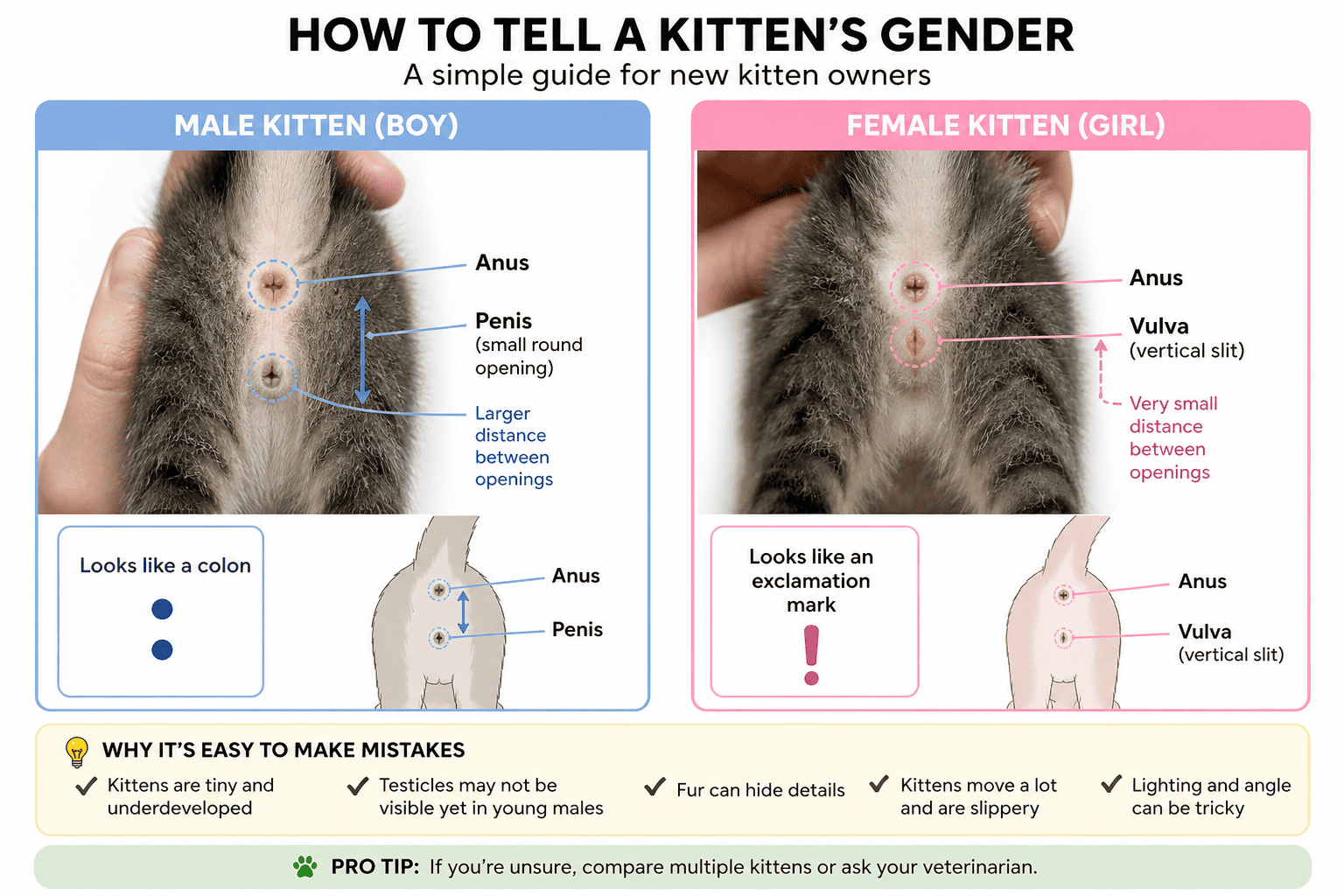
- Openings are farther apart
- Shape looks like a colon (:)
- Top: anus
- Bottom: small round opening (penis)
2. Check the distance
- Females: almost no gap between openings
- Males: noticeable gap (space where testicles will develop)
3. Look for testicles (if older)
- In kittens 3–6+ weeks, males may start showing small bumps (testicles)
- In very young kittens, they may not be visible yet
Why It’s Easy to Make Mistakes
Even experienced people sometimes get it wrong. Here’s why:
1. Kittens are tiny
- Everything is very small and underdeveloped
- Differences are subtle, especially in newborns
2. Testicles aren’t visible yet
- In young males, testicles may not have descended
- So they look very similar to females
3. Fur can hide details
- Long or dense fur makes it harder to see clearly
4. Position matters
- If the kitten is moving or not relaxed, it’s easy to misinterpret
5. Lighting and angle
- Poor lighting = wrong conclusions